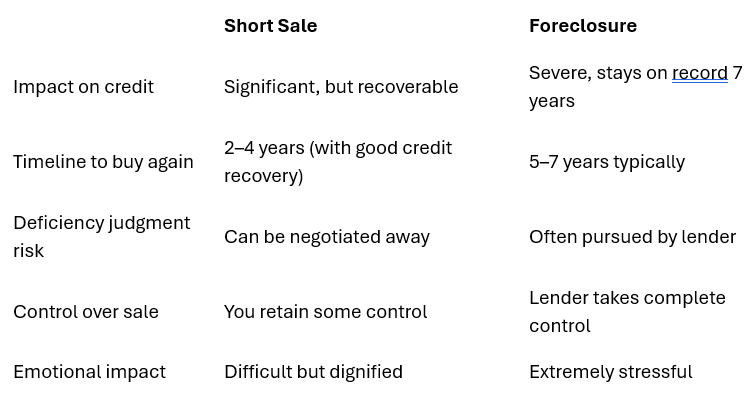
If you're behind on payments or facing hardship, call a short sale specialist before the bank starts foreclosure proceedings. Time matters enormously.
What Sellers Need to Qualify for Short Sale
Not every homeowner qualifies for a short sale. Lenders typically require evidence of:
- Financial hardship — Job loss, divorce, medical bills, death of a co-borrower, or another documented hardship
- Insolvency — You don't have significant liquid assets that could cover the gap
- A willing buyer — The lender wants to see a real offer on the table
Your agent will help you prepare a hardship letter and financial documentation package for the lender. This is where experience matters: a poorly prepared short-sales package can result in rejection or months of unnecessary delays.
How Long Does a Short Sale Take in Michigan?
This is the question every buyer and seller asks. The honest answer: it varies significantly, but most short sales in Wayne County take 60–120 days from accepted offer to closing. Some straightforward cases with cooperative lenders close in 45 days. Complex situations with multiple lenders can take 6 months or more.
Patience is required. The biggest delays come from:
- Lenders being slow to assign a negotiator to the file
- Missing documentation in the hardship package
- Low appraisals from the lender's BPO (Broker Price Opinion)
- Multiple mortgages or liens requiring multiple lender approvals
An agent who specializes in short sales knows how to follow up aggressively with lenders, escalate stalled files, and keep the transaction moving.
Buying a Short Sale or Foreclosure in Wayne County
For buyers, distressed properties can offer real value, but they also come with real risks. Here's what to keep in mind.
Short sales are sold "as-is” almost always. Sellers in financial distress typically cannot afford repairs. Buyers need to budget for potential renovation costs and must conduct a thorough home inspection (never skip this, even on an as-is sale).
Foreclosures (REOs) are bank-owned. After a foreclosure is complete, the bank owns the property and lists it for sale. These are often vacant homes that may have been neglected. Utilities may have been off, and issues like mold, burst pipes, or vandalism are not uncommon.
Financing can be trickier. Some distressed properties don't qualify for conventional financing due to condition. FHA 203(k) renovation loans can be a solution for buyers who want to purchase and renovate in one loan.
Competition can be fierce for well-priced distressed properties. Don't assume you'll get a deep discount just because it's a short sale, in popular Wayne County neighborhoods, well-priced short sales attract multiple offers.
How a Specialist Makes the Difference
Short sales and foreclosures require a different skill set than traditional real estate. An experienced agent:
- Prepares a complete, lender-ready hardship package from day one
- Knows how to communicate with loss mitigation departments at major banks
- Understands Michigan-specific laws around deficiency judgments
- Can spot red flags in distressed properties that an inexperienced buyer might miss
- Has relationships with lenders and title companies that specialize in distressed transactions
Facing Financial Hardship? Let's Talk.
You don't have to face this alone. A free, confidential consultation can help you understand all your options — including short sale, loan modification, or other alternatives to foreclosure.
Call Terry Ozak at RE/MAX Leading Edge: (734) 437-6380
Certified Short Sale and Foreclosure Resource (SFR). Serving Wayne, Oakland, and Washtenaw Counties for over 35 years. All conversations are completely confidential